
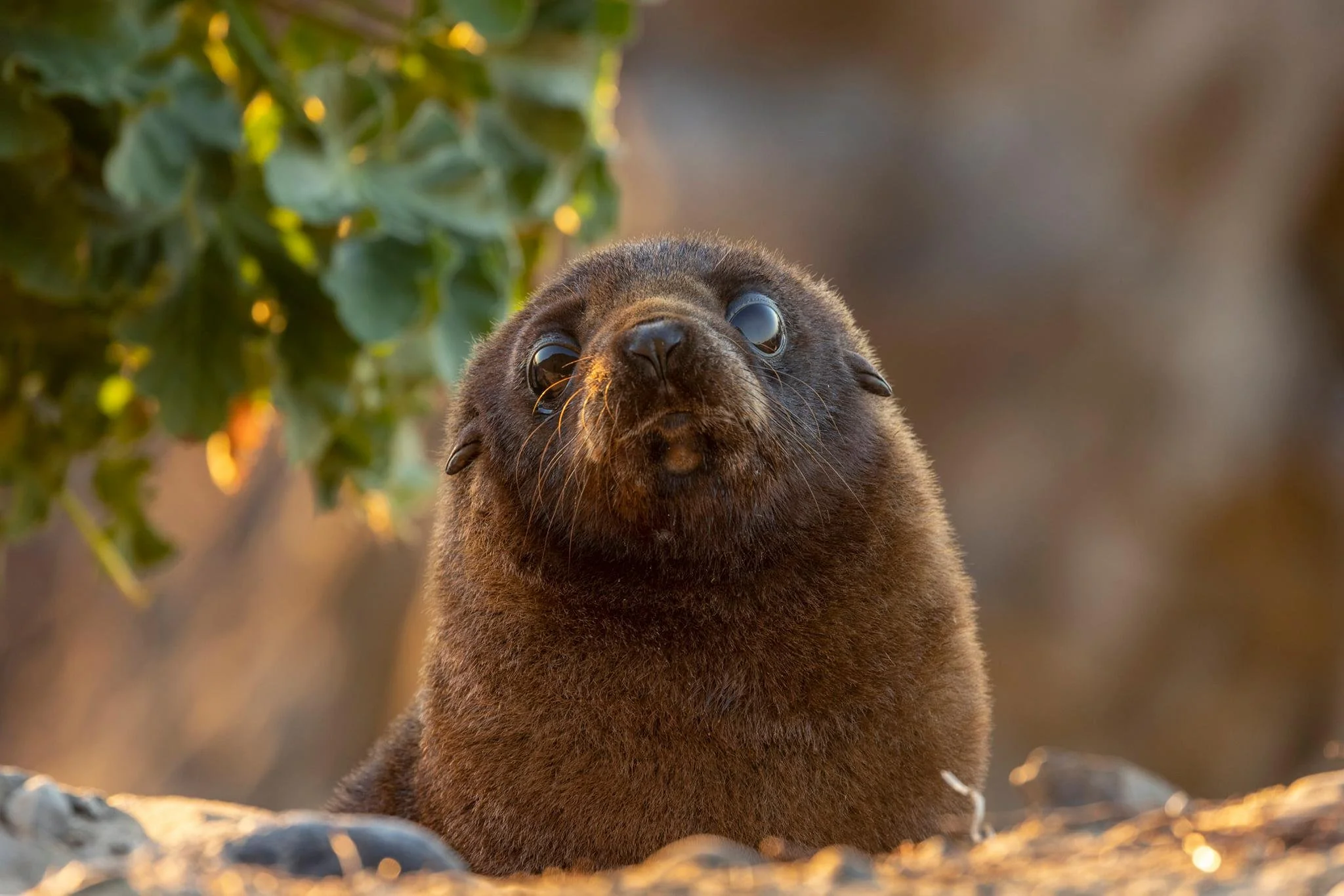
Wildlife Interactions
Respect Nature
The Tiaki Promise is New Zealand’s code of conduct for responsible travel and sustainable tourism. Its core Protect Nature pillar outlines the rules for wildlife interactions enforced by the Department of Conservation.
Compliance
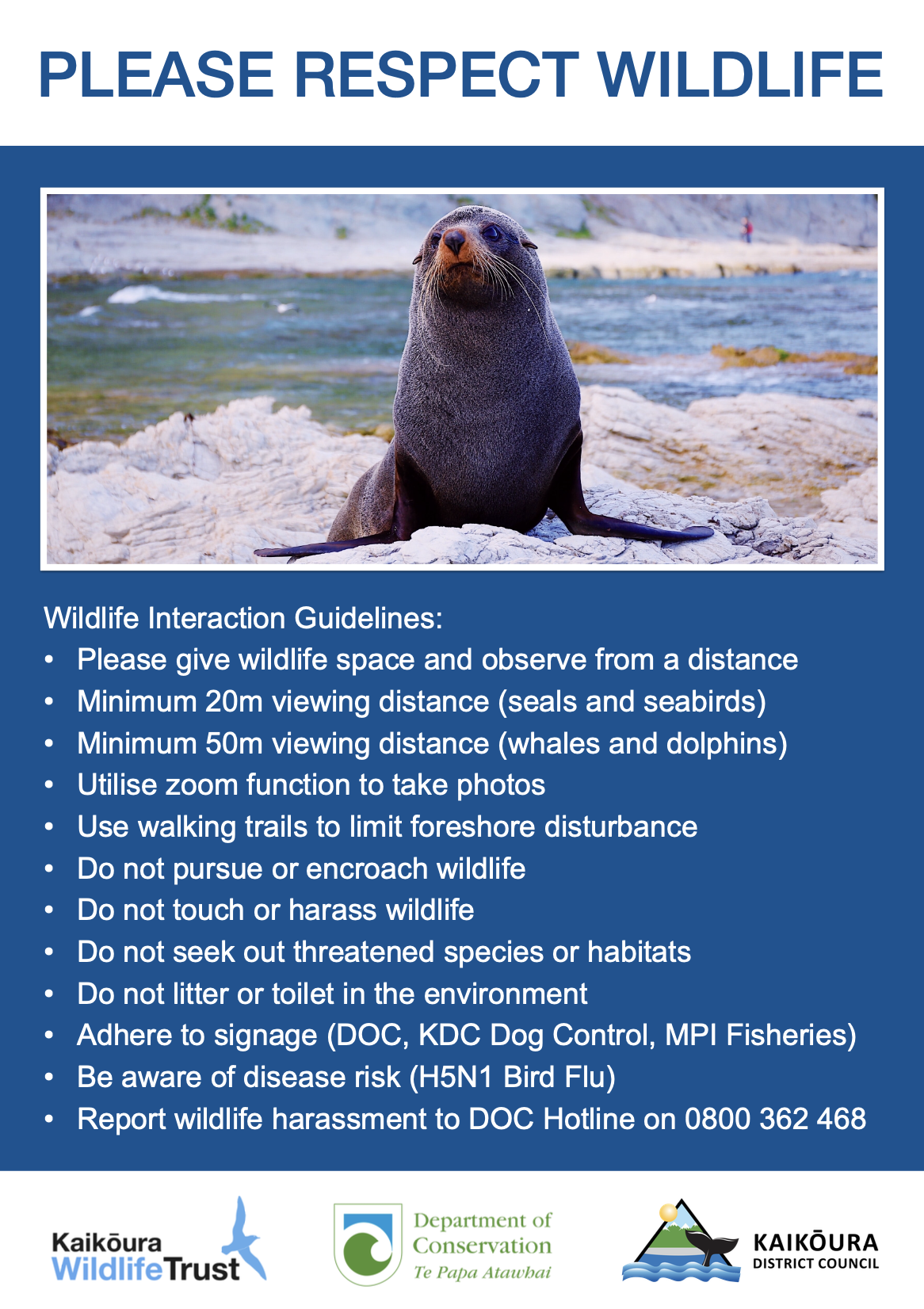
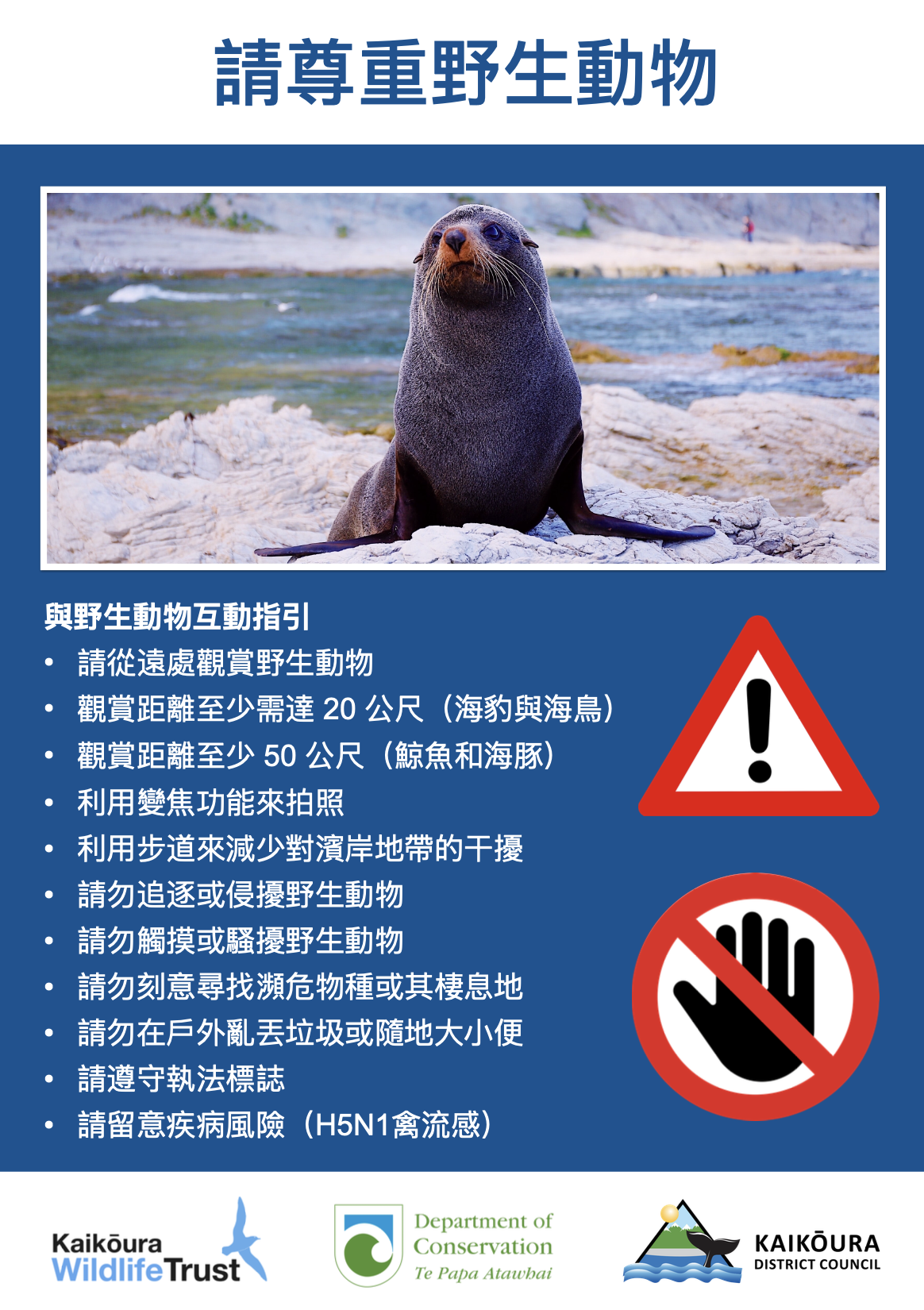
Minimum Viewing Distance: Give Wildlife Space — maintain minimum viewing distances. Do not encroach, disturb or or harrass wildlife.
Pets and Biosecurity: Dog Restrictions — obey all rules prohibiting dogs in protected wildlife areas, ensuring adherence to Dogs Prohibited and Dogs On Leash signage. Always keep dogs controlled where allowed. Breaches incur infringement notices and fines. Biosecurity — clean your gear and abide by relevant signage (e.g. H5N1 bird flu).
Drones and Vehicles: Flying drones over public conservation land or near marine mammals is prohibited and requires a complex permit process from DOC. Unauthorized use can terrify wildlife and lead to fines of up to NZ$250,000. Drive with caution in areas populated by nocturnal wildlife, or sites prone to seabird crash landing.
Report
Report wildlife harassment or illegal activity involving wildlife by contacting the Department of Conservation immediately via the DOC Hotline on 0800 362 468.
Marine Mammals Protection Act 1978 (pinnipeds and cetaceans): Disturbing or harassing protected marine mammals carries court-imposed fines of up to $250,000 or imprisonment. DOC also issues direct infringements for reckless behavior (e.g. penalities for swimming/interacting with orca).
Wildlife Act 1953 (native birds): Illegally harming or killing protected wildlife carries court fines of up to $100,000, or up to 2 years imprisonment.
Guidelines
Keep Your Distance
Threatened Species: Much of New Zealand’s wildlife is threatened or endangered — visitor disturbance is an avoidable threat. Please ensure you follow critical wildlife rules and interaction guidelines.
Stay Back: You must maintain minimum viewing distances at all times. Never touch wildlife, or throw objects at wildlife. It is illegal to disturb, harrass or harm protected species.
Never Surround: Avoid encroachment and cornering wildlife — always leave a clear unblocked path for wildlife to evade and escape.
Move slowly: Avoid sudden movements. If an animal stops what it is doing, stares, or tries to flee, you are too close and should back away.
Keep Quiet: Speak in low voices or remain completely silent to avoid startling wildlife.
Use Zoom Lens: Rely on cameras, phones, binoculars or scopes to see and capture details, rather than walking closer.
Minimum Viewing Distances
Seals and Sea Lions: Maintain a minimum distance of 20m from marine mammals on land. (20m is equivalent to the length of a tennis court).
Whales and Dolphins: Keep a minimum distance of 50m at sea.
Dolphins: No more than three vessels or aircraft are allowed within 300m of a pod.
Birds: Maintain a respectful distance around native birds such as penguins and shorebirds. Getting too close causes extreme stress and can disrupt breeding, with ongoing disturbance impacting survival. Never use flashlights near penguins and keep out of direct line of sight.
Chief Executive Officer
We count on this visionary to define strategic priorities, allocate resources responsibly, and ensure every decision reinforces long-term value creation.
Head of Operations
We trust this leader to synchronize production, logistics, and support functions, cultivating dependable processes that uphold our service commitments.

Lead Engineer
We depend on this engineer to transform conceptual requirements into robust technical solutions that integrate seamlessly with existing infrastructures.