Responsible Dog Ownership
Pet Ownership
Nearly two-thirds of New Zealand households share their home with a pet, highlighting the deep bond our nation has with animals. Cats are the most popular pet, with 40% of households owning a feline companion, while 31% of homes own a dog. As pet lovers, we have a responsibility to prevent our four-legged family members from negatively impacting people, animals and the environment — by adherence to local bylaws.
Pets & Wildlife
Owning a companion animal is a responsibility that involves protecting and enjoying pets, whilst safeguarding wildlife. Pets are cherished family members, and it takes work to effectively look after our companions. We have a responsibility to ensure that our pets do not pose a danger to wildlife and as pet owners we can help prevent avoidable predation risk. As fellow cat and dog owners, we care about pet and wildlife wellbeing equally.
Dog Ownership
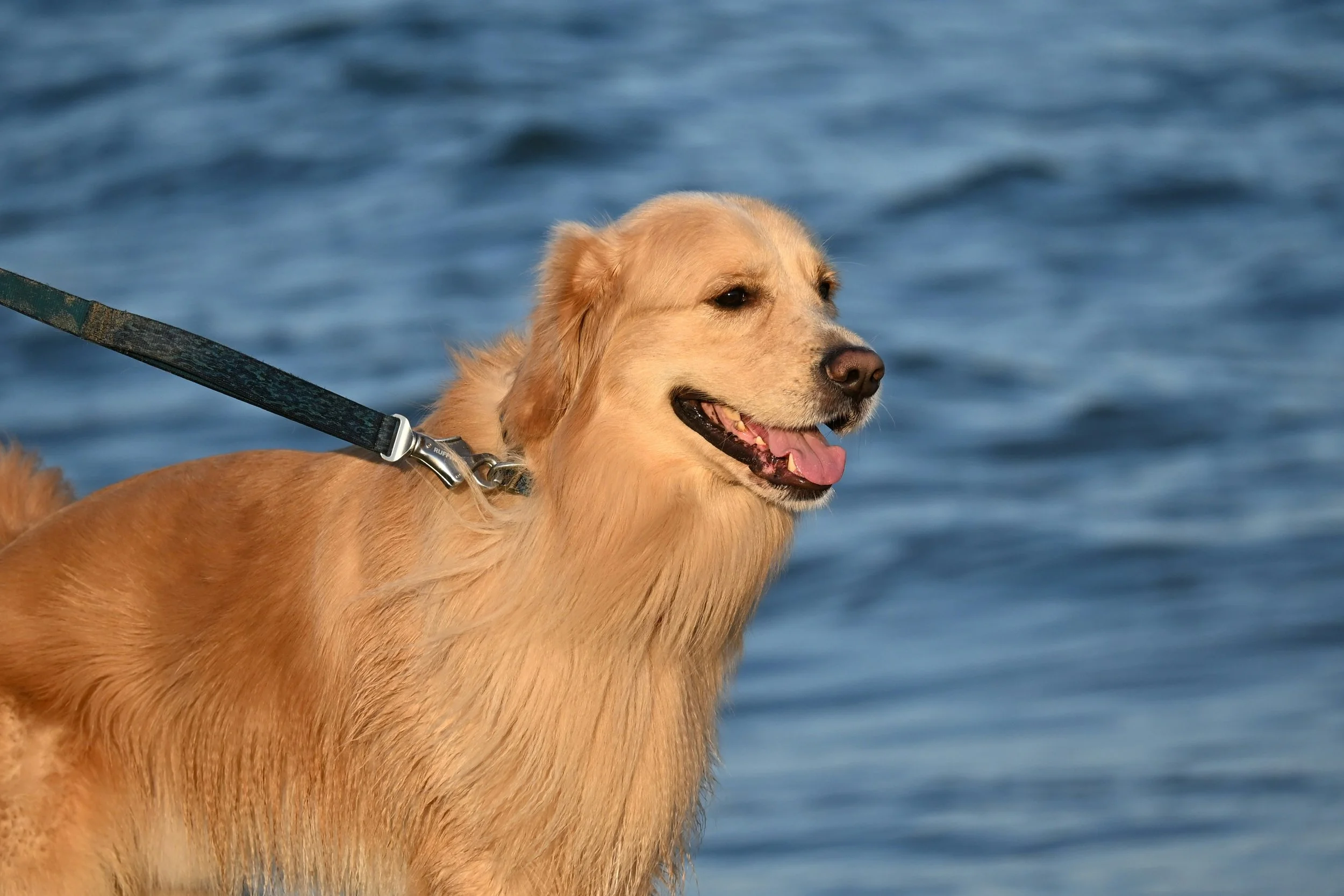
In New Zealand, approximately 830,000 dogs are part of our households. Owning a dog provides physical, mental and social benefits, with many canines being part of our active lifestyles. Dog ownership goes hand in hand with outdoor recreational activities — meaning dogs join us in every day life wherever we go.
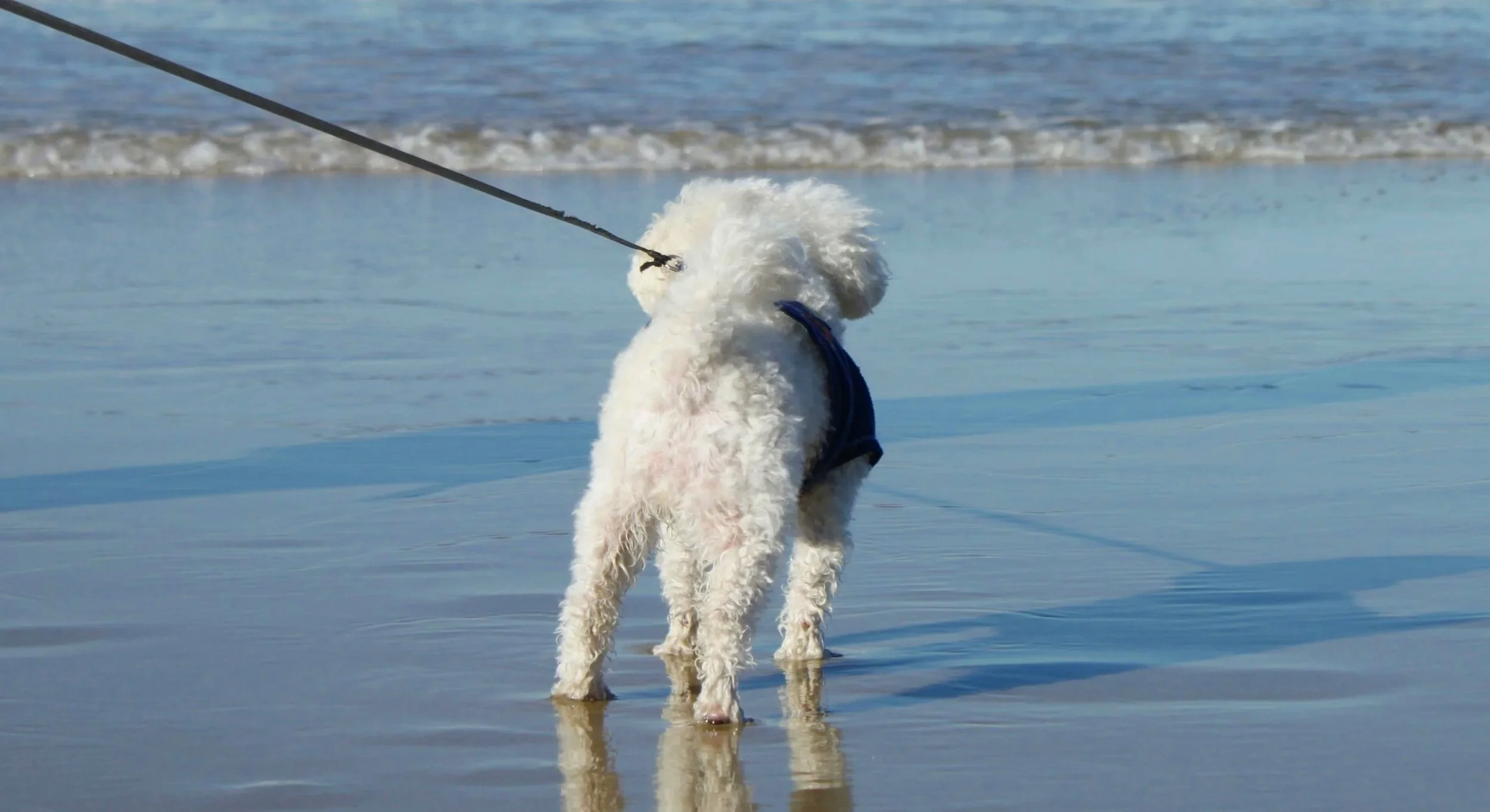
Dog walking brings our pets as much enjoyment as us. Walking a dog on a lead is just as important as running off leash regarding enrichment. However, practicably there are suitable and unsuitable areas to do so.
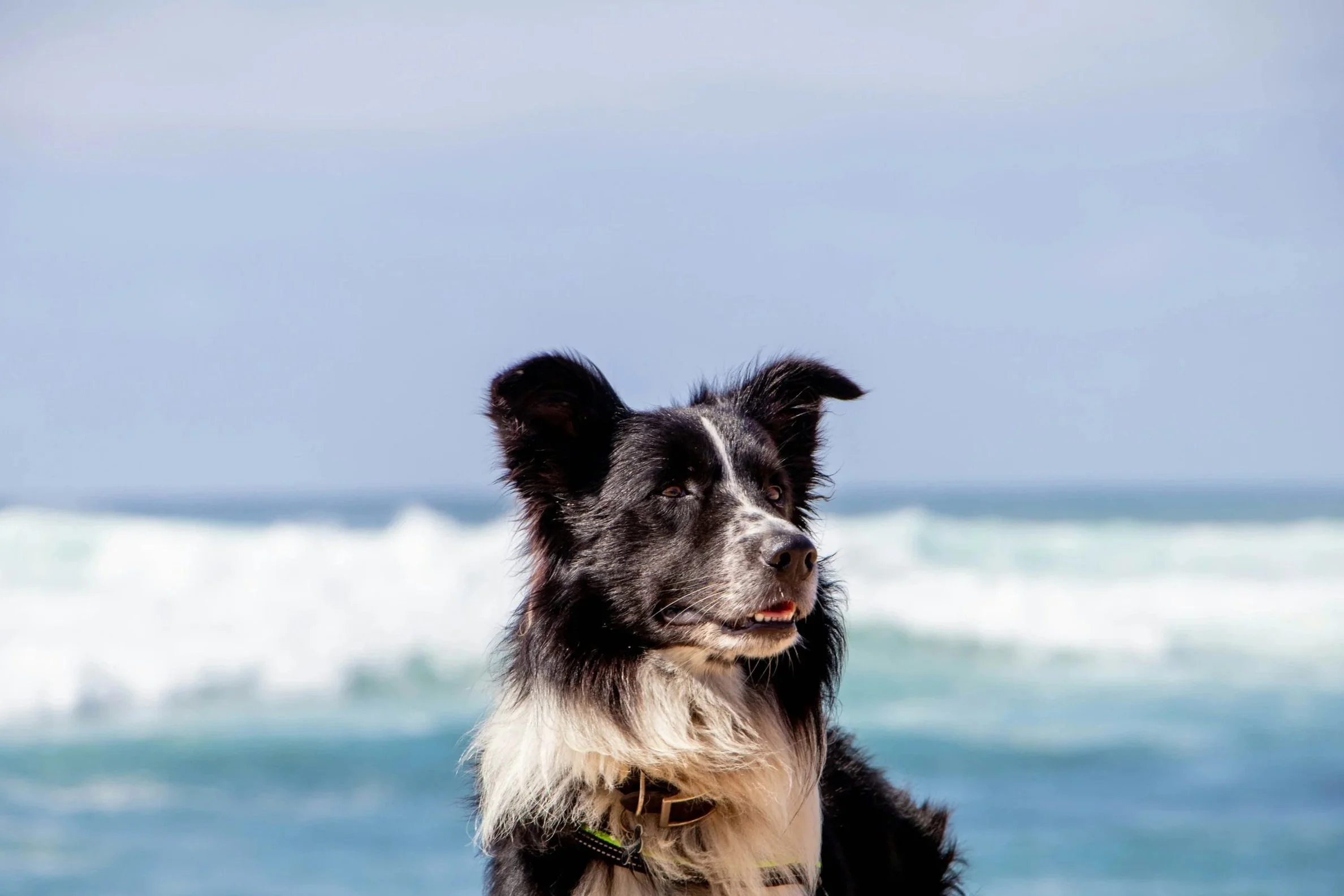
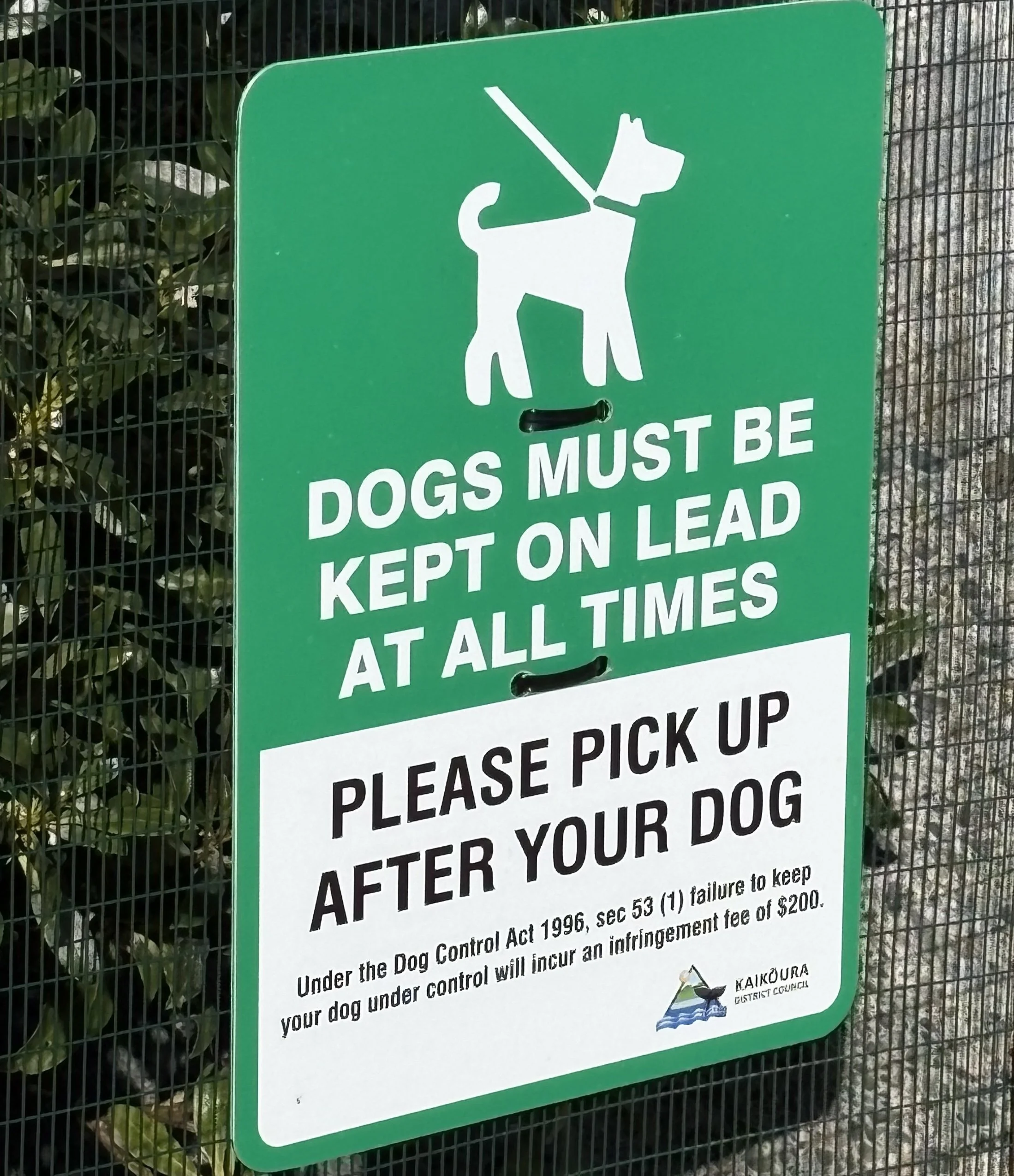
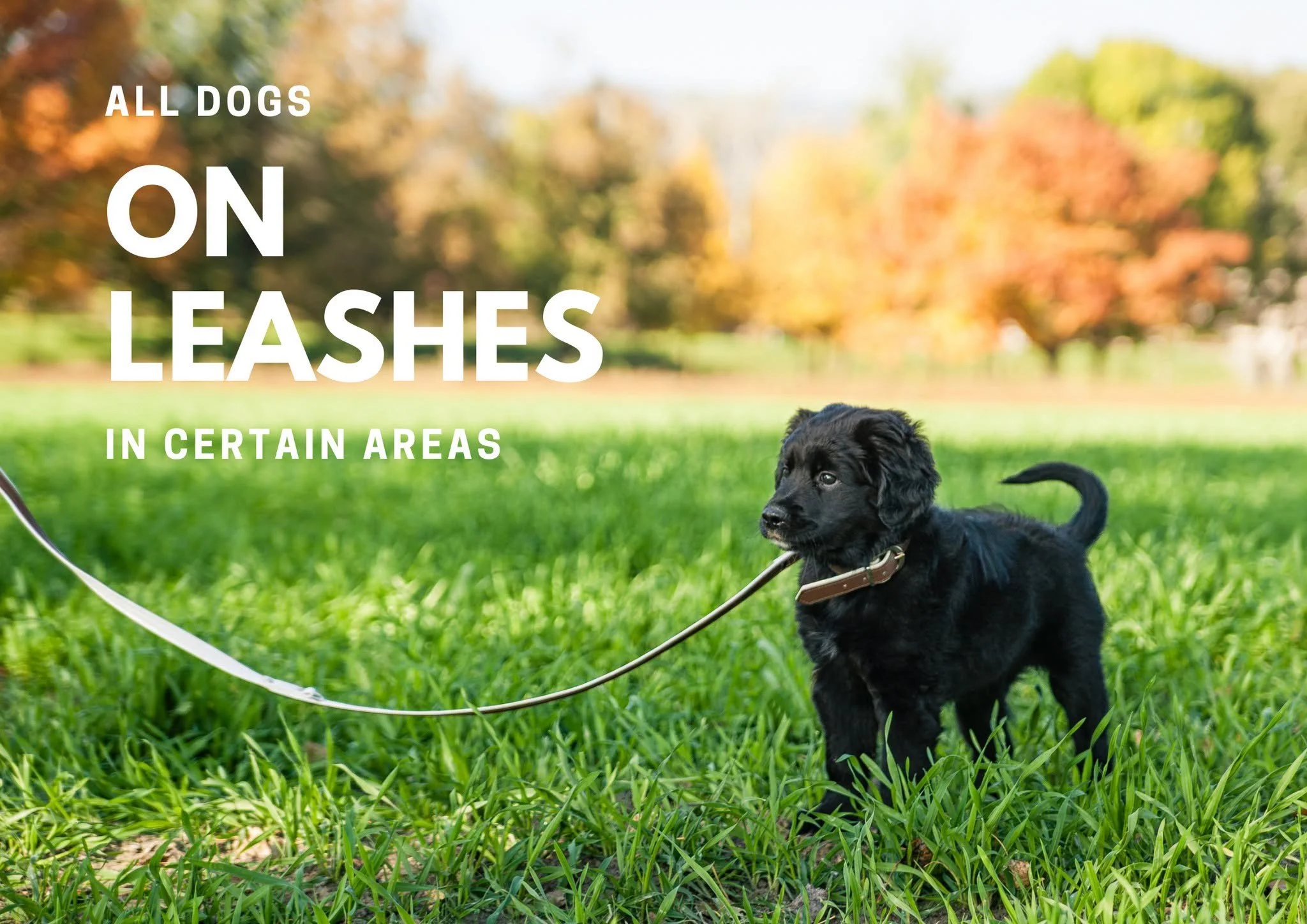
In general, leashing is safest for dogs, other people in the community, and wildlife. Keeping dogs under control on leads lowers the risk of pets going missing, injury or death; by eliminating the chance of vehicle strike, dog fights, or toxicity. It’s also the best thing pet owners can do for native wildlife. For dogs, a little leash goes a long way — particularly in biodiverse habitats.
In coastal sites, it is best to maintain dogs under control via leashing, whilst trails and dog parks are an option for off-leash exercising. In Kaikōura, public feedback often highlights lack of a dog park for safe exercise areas, with planning for this community asset being underway at Pohowera Park.
Responsible dog ownership plays a critical role in protecting and enjoying our pets while also safeguarding local wildlife. Good dog ownership requires proactive owners, community guardianship, education and enforcement.
Dog Control
Dog ownership is governed by national legislation and local bylaws focused on public safety, animal welfare and community wellbeing. Dog control in New Zealand operates under the Dog Control Act 1996, with enforcement managed by councils.
Dog control regulations involve mandatory registration and microchipping (from 3 months of age); control on property (dogs securely contained); control in public (close supervision, voice control, leash requirements); and welfare. Dog control enforcement relates to roaming dogs, dog attacks, and nuisance barking.
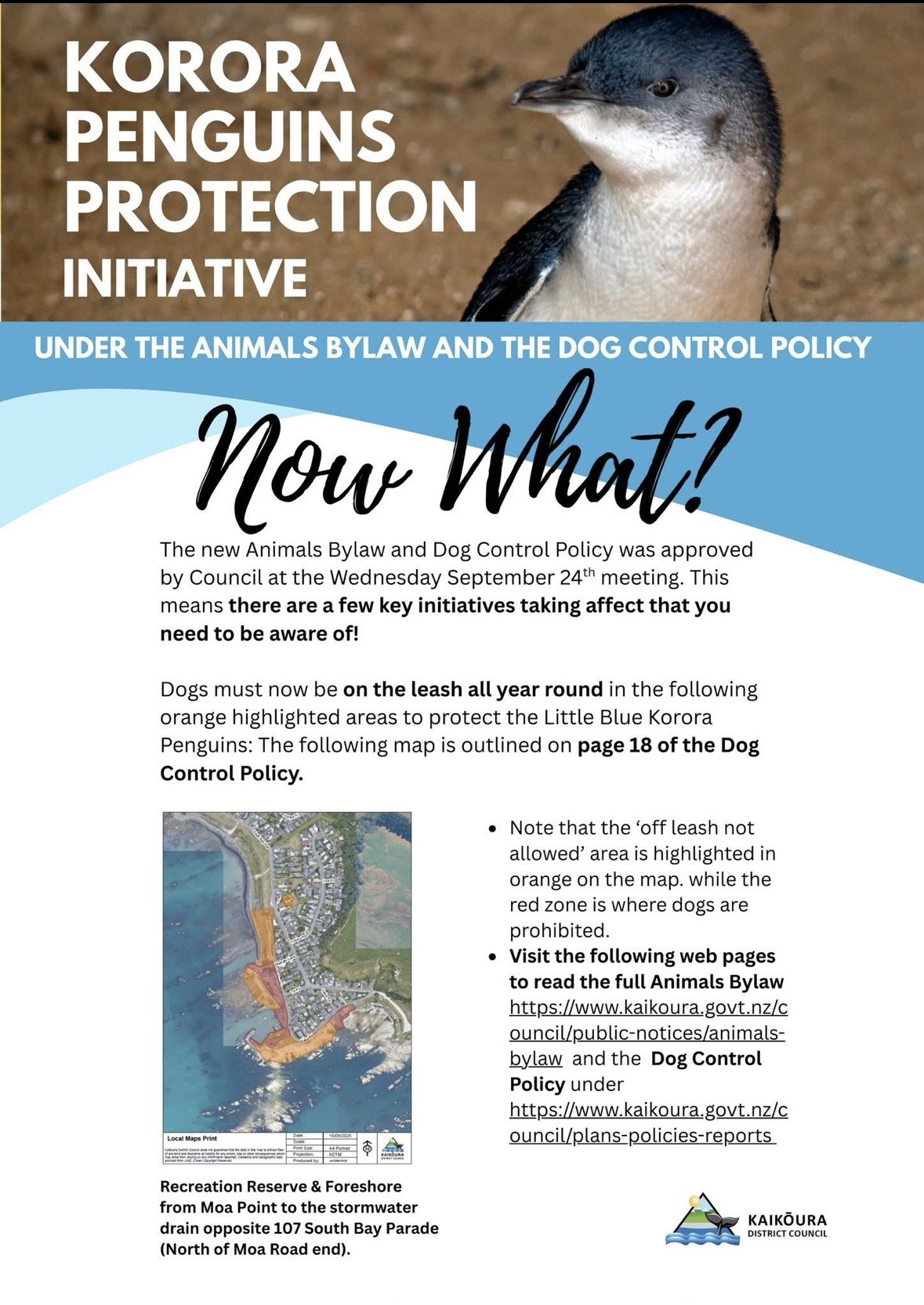
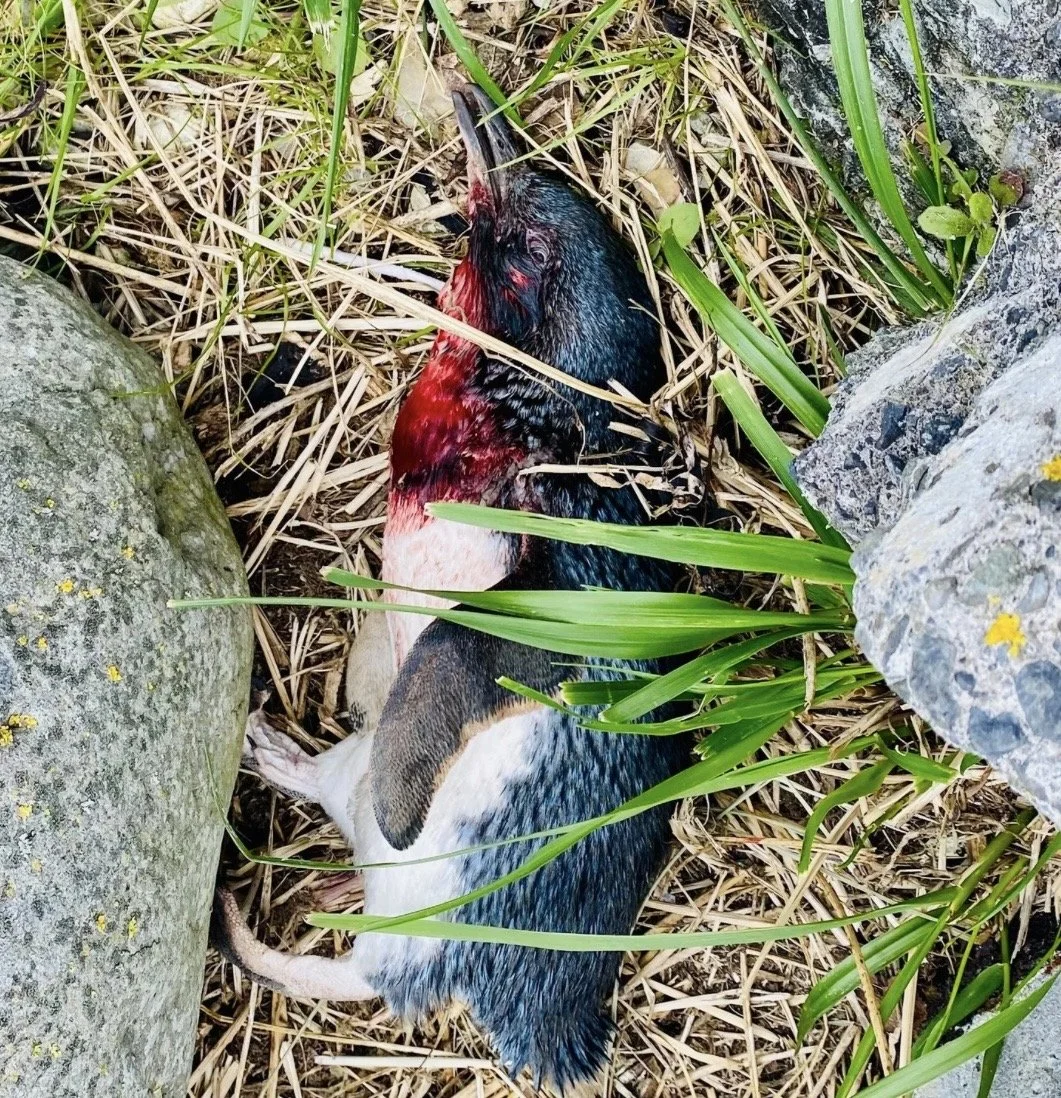
Dogs pose a significant danger to wildlife, with predation being a critical risk to ground nesting and flightless birds. Uncontrolled dogs are a predation and disturbance threat to penguins and seals. Dog attacks are the greatest threat to kororā survival on land, particularly during the breeding and moulting season, with roaming dogs causing preventable injury and mortality. Dog attacks on wildlife are increasing, and can be reported to the DOC Hotline on 0800 362 468.
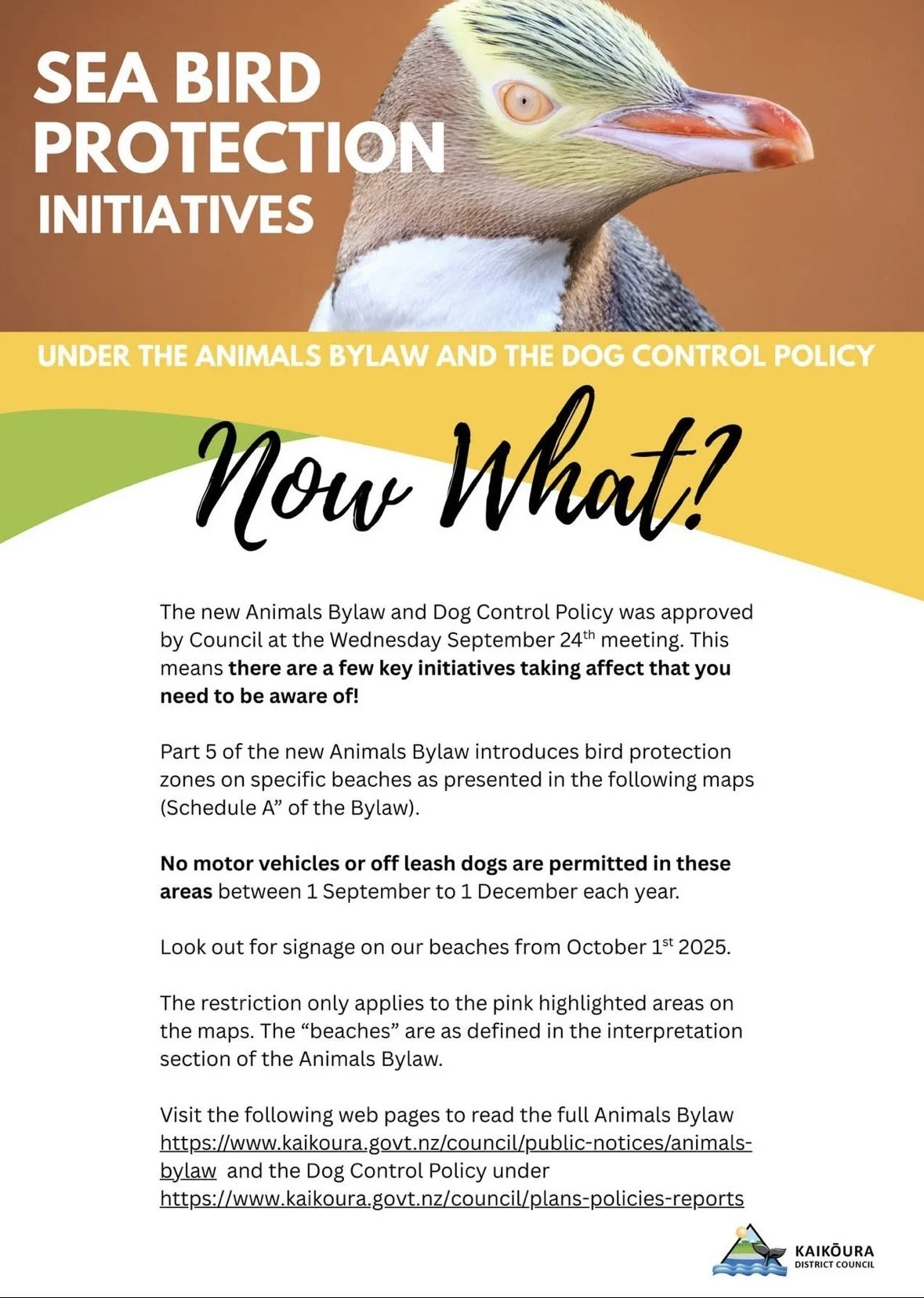
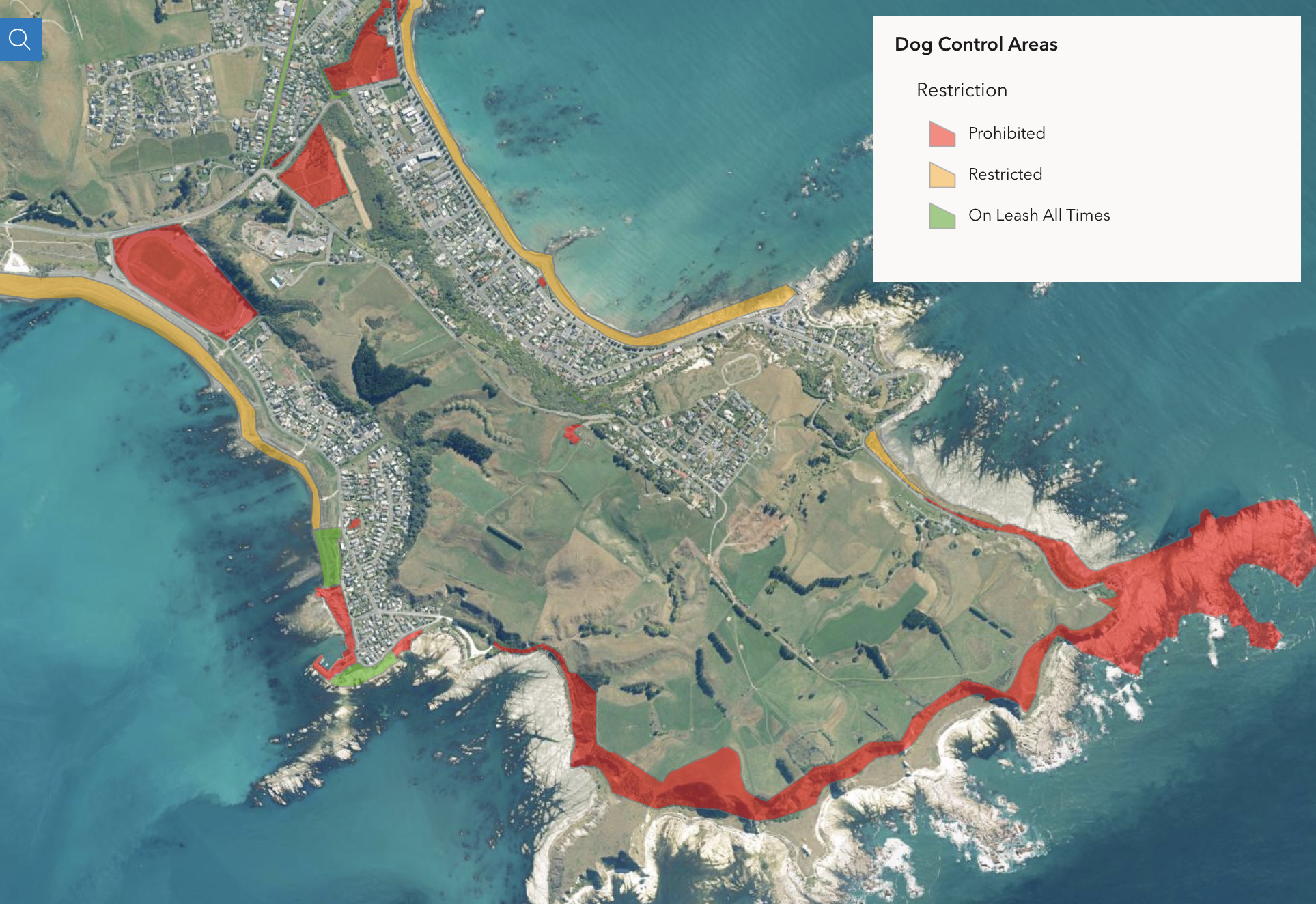
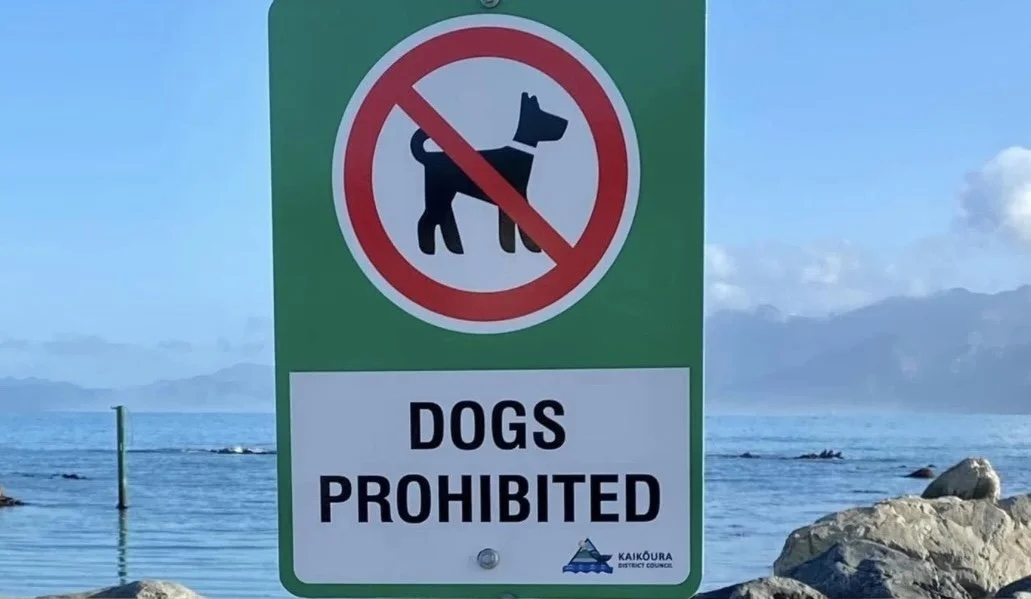
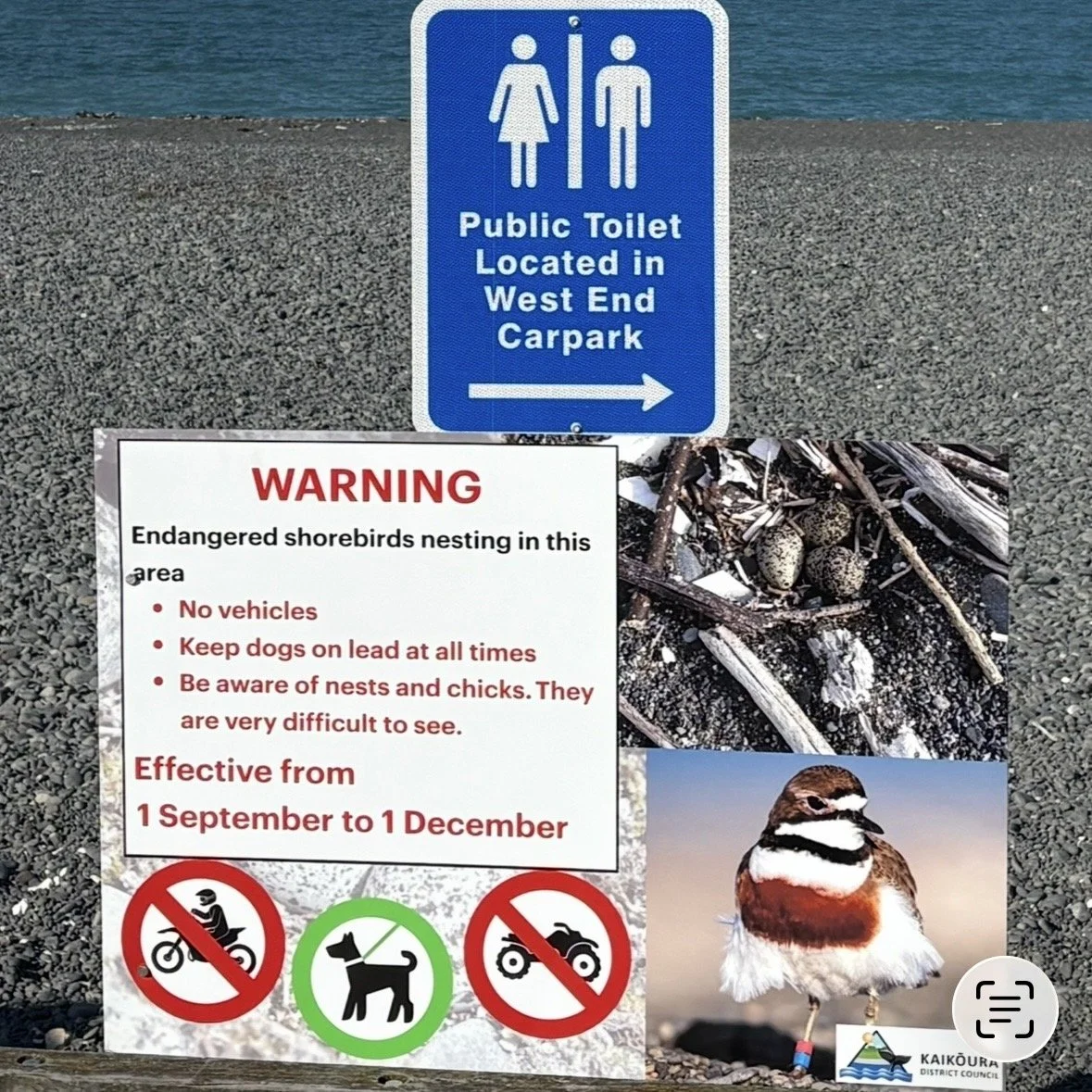
The Animals Bylaw 2025 in Kaikōura consists of a revised version of the Dog Control Bylaw 2015, which was broadened to include additional dog controlled areas (seabirds), and seasonal beach restrictions (shorebirds). In Kaikōura dogs are prohibited at Point Kean, Kaikōura Peninsula Track, South Bay Marina, Kaikōura Coastguard, and South Bay Boat Park. At other sites dogs must be leashed year around where signage stipulates; whilst seasonal dog leashing is required from 1 September - 1 December (refer to Dog Control Areas).